



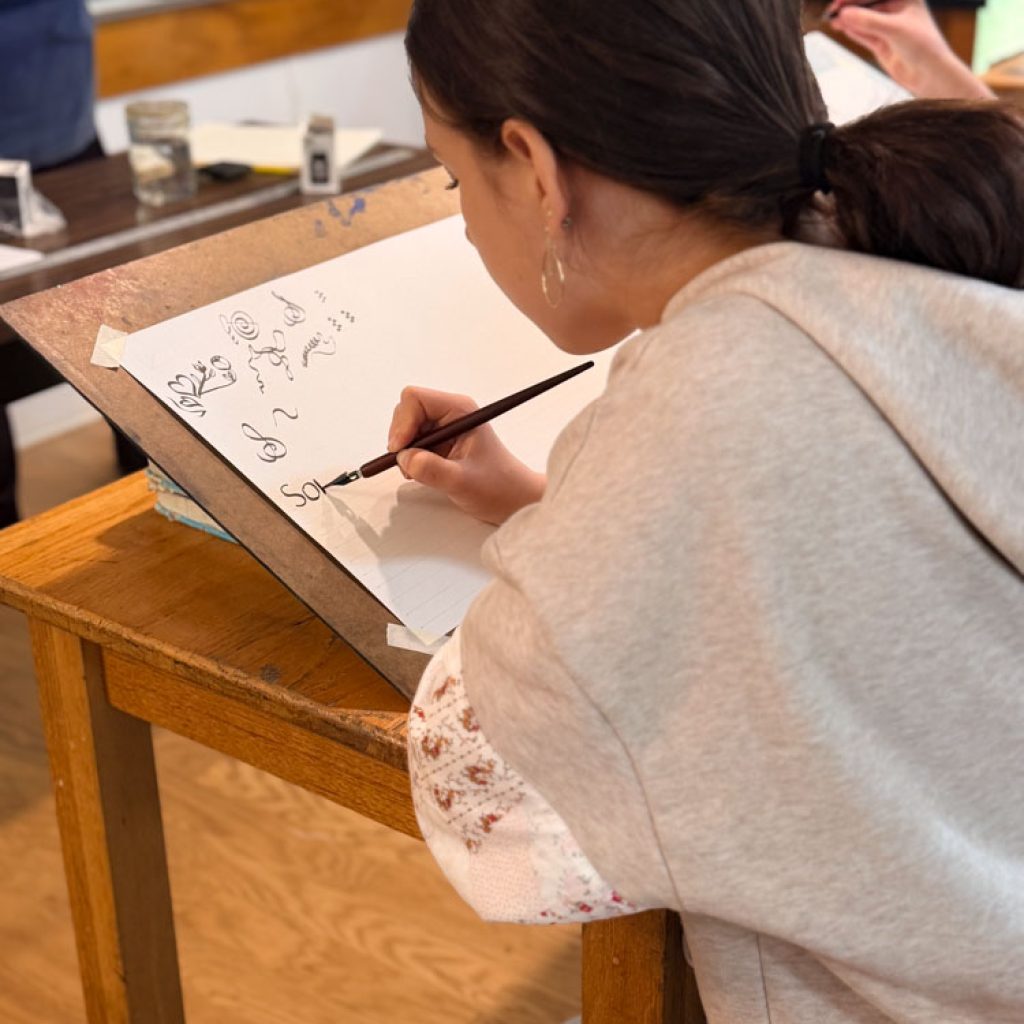
Waldorf education is fundamentally social and experiential. Learning in the Waldorf classroom is designed to happen through direct human connection, shared activity, and engagement with the physical world. In this context, individual screen-based work is considered contrary to the core principles of the curriculum, while hand-writing, drawing, painting, crafting, and other hands-on experiences are integral to this type of learning.
Students learn as part of a living classroom community: working together, collaborating, listening, observing, and engaging with a real teacher who guides the learning process in person. This approach supports deep attention, meaningful relationships, and active participation in the learning experience.
By prioritizing hands-on work, movement, artistic expression, and face-to-face instruction, Waldorf classrooms create an environment where students develop focus, imagination, and social awareness without reliance on screens.
When computer work is introduced in the middle school years, it is framed as one tool among many in a student’s expanding set of skills for communicating, creating, and sharing information. Rather than replacing hands-on or interpersonal learning, technology is integrated thoughtfully and purposefully, supporting students as they develop digital literacy alongside strong foundations in writing, discussion, artistic work, and critical thinking.