

Teachers at the Charlottesville Waldorf School are dedicated to fostering an inner enthusiasm for learning within every child.
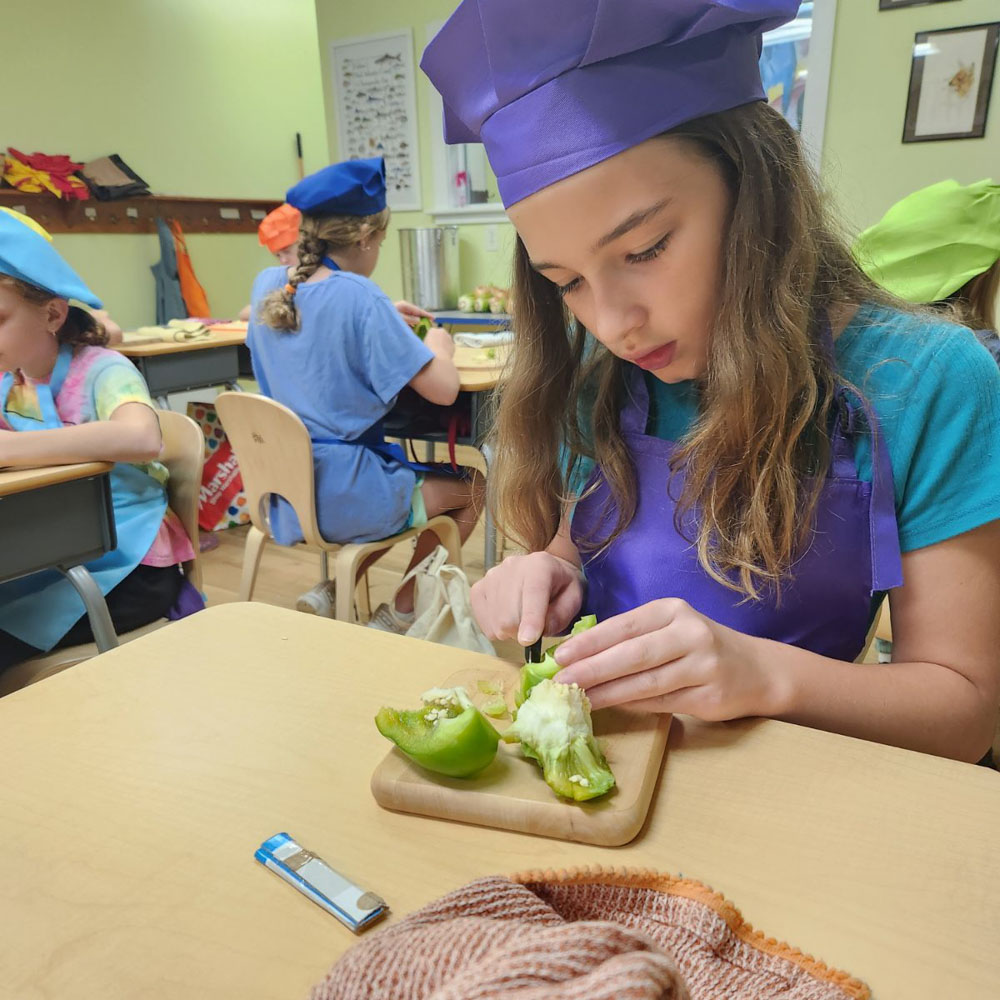
At the Charlottesville Waldorf School, the students’ academic journey begins in first grade and builds through the grades with a curriculum based in a holistic and meticulous understanding of child development. The daily rhythm will continue in much the same fashion through the grade school years: each day begins with morning Main Lesson, an extended class period dedicated to a rotating schedule of language arts, mathematics, history, and sciences. During each Main Lesson block (a period of study usually about 4 weeks long), students create their own handwritten and illustrated comprehensive studies of the topic – their Main Lesson books. The day continues with specialty classes, additional periods for ongoing Language Arts, Math, Music, Art, and other classes, and plenty of less structured time outdoors. The Early Grades at the Waldorf School gives children a safe and encouraging space to embark on their educational journey and discover their love of learning.
Specialty Classes in the Elementary Grades start with Spanish, Handwork, and Movement, adding Orchestra and Woodwork in Third and Fourth Grades.
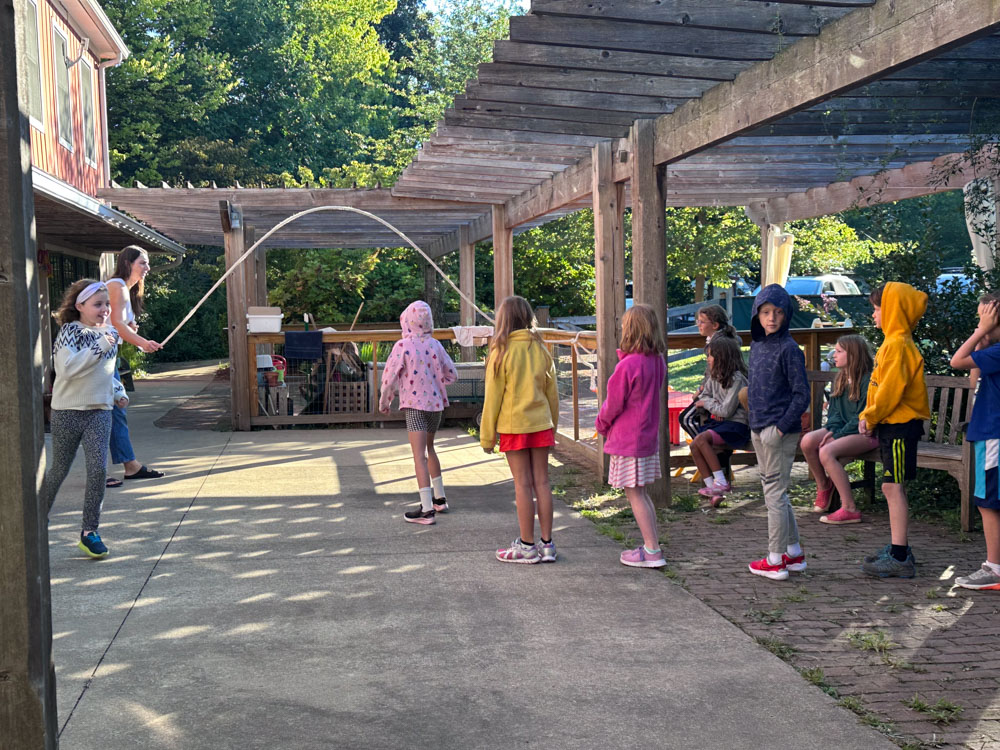
First Grade: The Year of Imagination
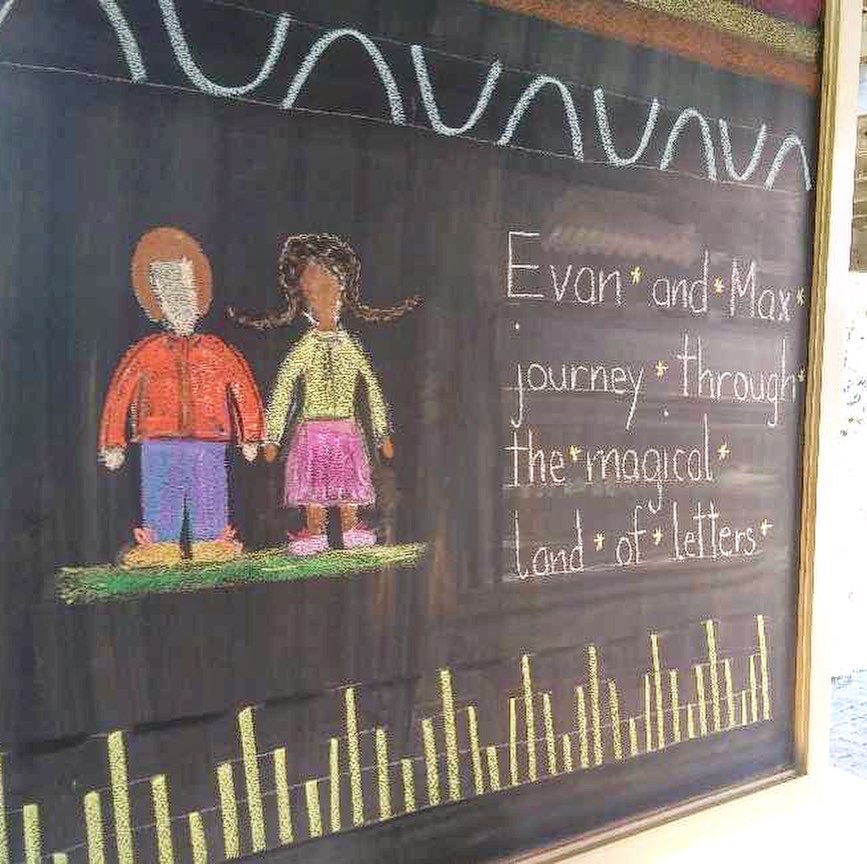
The First Grade marks a new stage of development, wherein children can begin to shift their focus from developing their physical bodies and becoming part of a group to the new challenge of academic learning.
First grade at the Charlottesville Waldorf School launches an eight-year journey. Leaving Kindergarten, children add thoughtful work to imaginary play. Friendships begin and broaden. New group skills invite wholeness, each child playing their role. The teacher, familiar with each child even before the year begins, forms lessons around daily rhythms; these structure and comfort the children in this new beginning.
When children enter the First Grade, they know that it is a Big Deal, and we do our best to show them that we understand that. We ask them to stand up straight and tall, so we can almost see those crowns on their heads. We ask them to sit at desks for part of the day. And we continue to give them meaningful work – although the work has changed to meet their Grade School selves.
Language & Literature
- Introduction of the upper and lowercase letters via fairy tales and stories from cultures around the world
- Narrative sequencing and comprehension through retelling of stories
- Learning consonant sounds by connecting them with forms of objects found in the physical world, such as the shape of a wave for “w”
- Introduction to vowel sounds through expression of inner moods, such as awe or surprise
- Building phonological awareness: rhyming, alliteration, syllable segmenting and substitution, and phoneme segmenting and substitution; exploring consonant-vowel-consonant words (short vowels), consonant digraphs, consonant blends, silent “e” words, and vowel teams
- Simple word construction, with a focus on consonant-vowel-consonant words
- Simple sentence construction (beginning sentences with a capital letter, ending with a period)
- Writing whole class and individual compositions to retell an event or a portion of a story
- Sight reading of sentences and stories, as well as known verses or speech exercises
- Practice of common sight words
- Reading decodable books
Mathematics
- Quality of whole numbers, one through ten
- Basic geometric shapes (square, triangle, circle)
- Writing and reading of Roman numerals I to X and Arabic numerals 1 to 100
- Subitizing
- Counting to 120 by ones and to 100 by fives, and tens
- Counting backwards from 50
- Skip counting by twos, threes, fours, fives, and sixes up to twelve times each number
- Even and odd numbers
- Addition, multiplication, subtraction, and division with whole numbers up to 24, from whole to parts and from parts to whole (e.g., 15 = 3 x 5 and 3 x 5 = 15) in horizontal format
- Addition and subtraction facts to 10, doubles, one less, one more, two less and two more
- Ordinal numbers
- Place value: tens and ones
- Estimating
Science
- Nature stories
Specialty Subjects
- Spanish: vocabulary, pronunciation, culture
- Handwork: knitting and purling on two needles
- Visual Arts: painting, guided drawing, beeswax modeling
- Music: singing, moving, pentatonic flute
- Movement: games and cooperative activities involving locomotor skills, directionality, and spatial awareness.
- Community Class: communication skills, listening, feelings, likes and dislikes, family and neighborhood, similarities and differences
Second Grade: The Year of Morality
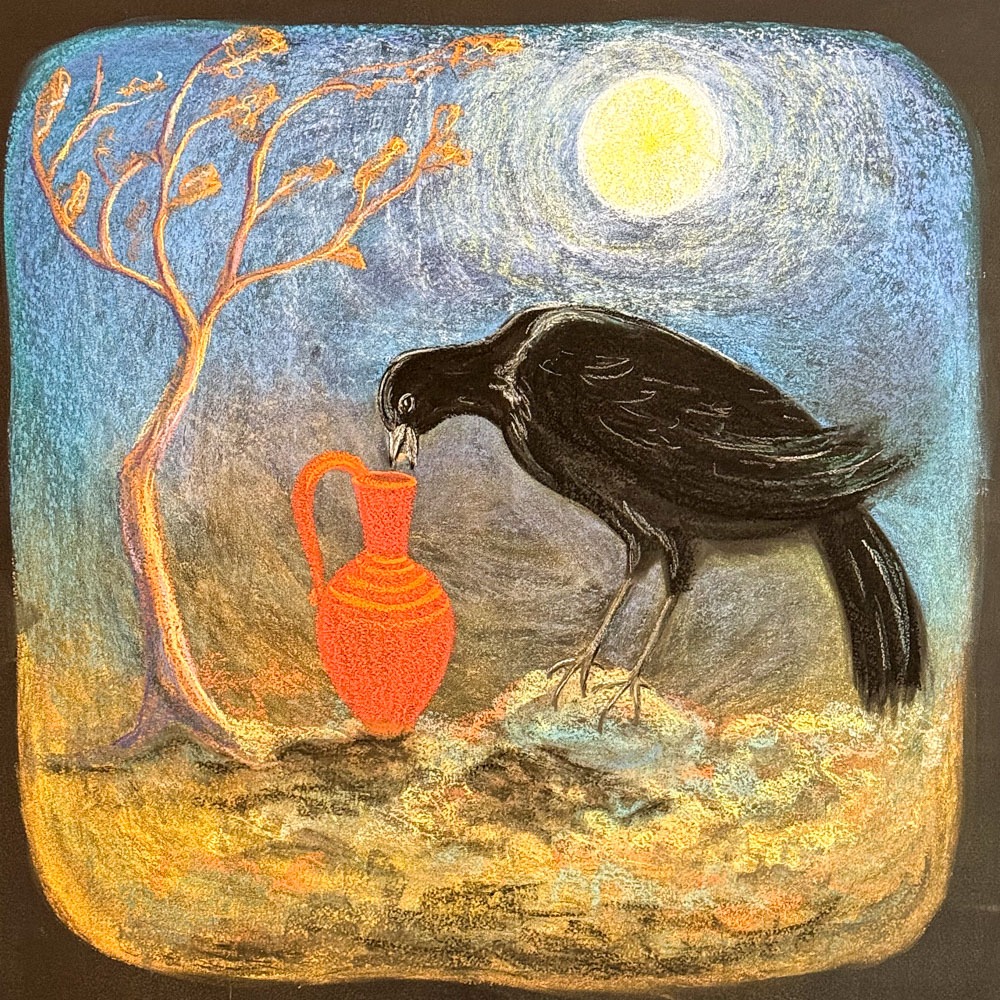
Second grade uniquely blends fables and legends with practical activities, fostering moral development and imaginative learning.
Language & Literature
- Legends, fables, and folktales
- Stories from cultures around the world, including biographies
- Building phonological awareness: rhyming, alliteration, sentence segmenting, syllable blending, and segmenting
- Narrative sequencing and comprehension through retelling of stories
- Vocabulary expansion: finding synonyms, word association
- Reading selected class readers
History
- Stories of heroes
Mathematics
- Place value
- Regrouping (carrying) and renaming (borrowing) in addition and subtraction
- Introduction of place value
- Problem solving, cont. (transition from mental/manipulatives to written)
- Skip counting; 1-12
- Introduction of the multiplication tables, 1-12
- Estimating
- Geometry (form drawing)
Science
- Nature stories
Specialty Subjects
- Spanish: vocabulary, pronunciation, culture
- Handwork: crochet back-and-forth and in the round
- Visual Arts: painting, guided drawing, modeling
- Music: Singing, games/dancing, pentatonic flute
- Movement: games, cooperative activities, and small-sided games involving locomotor skills, directionality, spatial awareness, and manipulative skill development.
- Community Class: communication skills, listening, equality and inequality, teasing and bullying, being brave and standing up, making a difference in school
- Gardening
Third Grade: The Year of Creation
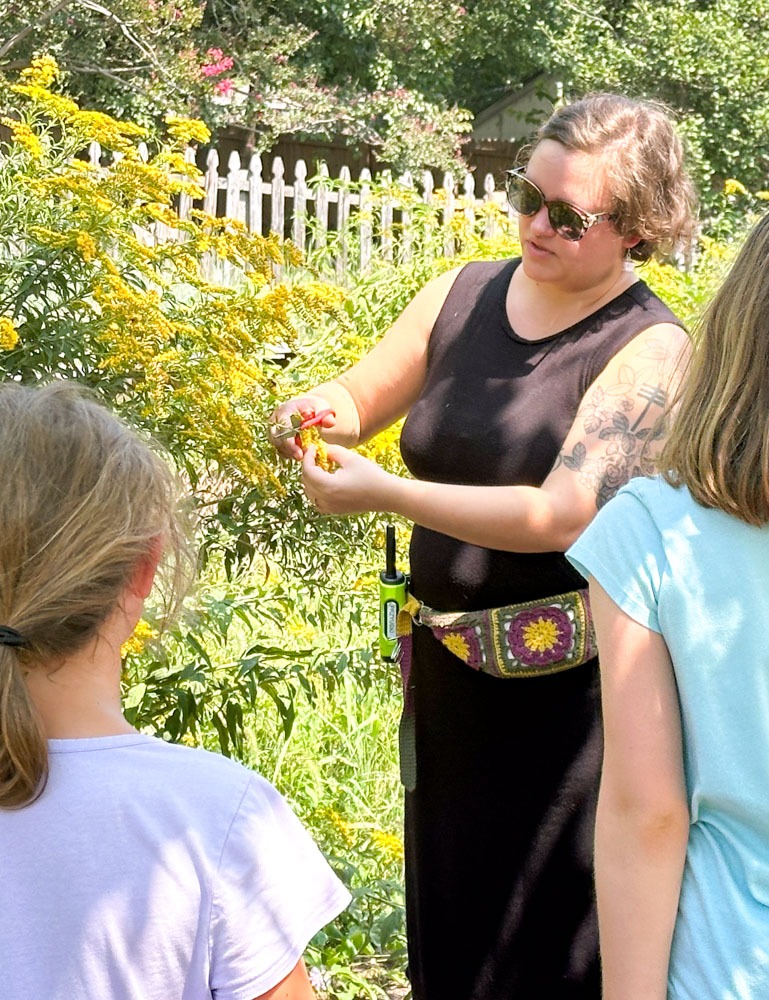
In third grade students engage in hands-on learning experiences that integrate practical skills with academic subjects, focusing on farming, building, and understanding time to foster independence and a deeper connection to the world around them.
Language & Literature
- Mastery of cursive writing
- Copying and taking dictation of narrative and descriptive compositions
- Writing of individual compositions, journal entries, and simple book reports
- Spelling patterns and rules
- Capitalization, proper nouns
- Punctuation: commas and end punctuations
- Four types of sentences
- Homonyms, synonyms, antonyms, cont.
- Tongue twisters, speech exercises
- Poetry & prose recitation
- Reading selected class readers
History
- Creation myths from around the world
Mathematics
- Measurement
- Review and extension of all previous work including measurement and money
- Multi digit multiplication
- Introduction to long division
- Practical math
- Memorization of basic facts; addition and multiplication
- Problem solving
- Introduction to long division
- Estimating
- Geometry (form drawing)
Science
- Study of practical arts: farming, housing
Specialty Subjects
- Spanish: vocabulary, pronunciation, culture
- Handwork: fiber processing, wet felting, and weaving
- Visual Arts: painting, guided drawing
- Music: singing, pentatonic flute/recorder, games/dancing, beginning strings class: violin/viola
- Movement: games, cooperative activities, and small-sided games involving manipulative skill development and team play, sportsmanship, warm-up and fitness.
- Community Class: developing classroom guidelines, nonverbal communication and miscommunication, active listening, understanding and expressing feelings, collaboration and teamwork, skills and abilities
- Gardening
Fourth Grade: The Year of Foundation
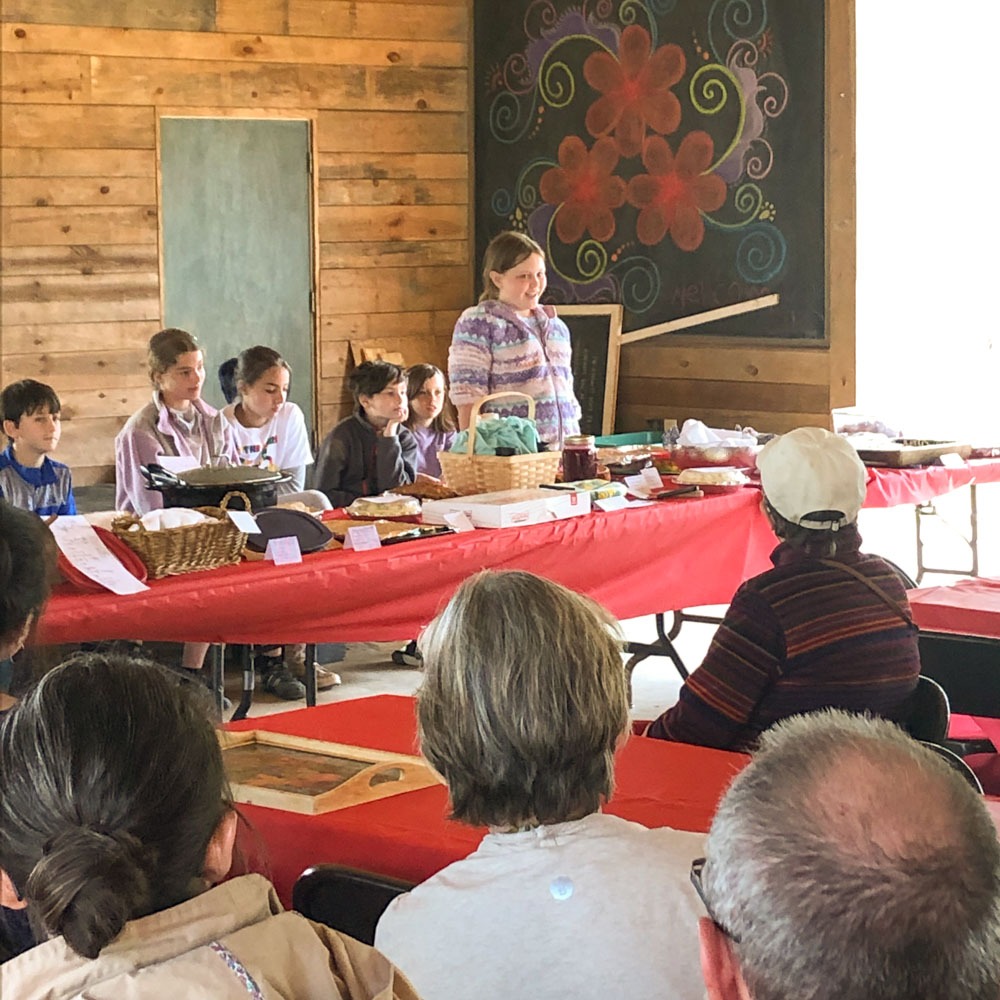
In fourth grade, students explore local geography and history, mythology, and fractions, fostering a sense of individuality and strengthening their cognitive and emotional development.
Language & Literature
- Spelling and usage rules for commonly misspelled and misused words
- Synonyms, antonyms, contractions, and homophones
- Parts of speech: nouns, pronouns, adjectives, verbs, adverbs, conjunctions, and prepositions
- Verb tenses: past, present, future
- Basic punctuation: capitalization, simple comma usage, ending punctuation, quotations
- Introduction to parts of the sentence: subject and predicate
- Four types of sentences: interrogative, declarative, exclamatory, imperative
- Dictionary skills: alphabetizing, dictionary searches, and definitions
- Composition: the sentence; the paragraph; punctuation; writing a rough and final draft
- Peer editing and peer sharing of written work
- Reading comprehension
- Penmanship
- Reading selected class readers
History
- Charlottesville and Virginia history
- Scandinavian and Polynesian mythology
Mathematics
- Review of addition, subtraction, multiplication, and division
- Multiplication tables through twelve
- Mental math (internal computation using the four processes)
- Multiple digit multiplication and long division
- Review of measurement and time
- Measurement conversions
- Square numbers and square roots
- Greatest common factors and least common multiples
- Introduction to fractions through stories, drawings, paper cutting, and games
- Equivalent fractions, improper fractions and mixed numbers
- Expanding and simplifying/reducing fractions
- Adding and subtracting fractions, mixed numbers, and whole numbers
- Multiplying and dividing fractions
- Factoring Trees
- Estimating
- Geometry (form drawing): Celtic braiding and knots
Science
- The animal world
Geography
- Geography of Virginia
- Mapmaking
Specialty Subjects
- Spanish: vocabulary, using verbs, grammar, culture
- Handwork: cross-stitch and embroidery
- Visual Arts: painting, guided drawing
- Music: singing, recorder, strings class (violin/viola/cello)
- Movement: games, cooperative activities, and small-sided games involving manipulative skill development and team play, sportsmanship, warm-up and fitness.
- Community Class: communication skills, listening, families and community, culture, perspective and stereotypes, bullying and bias, being an ally
- Woodwork
Fifth Grade: The Year of Equilibrium
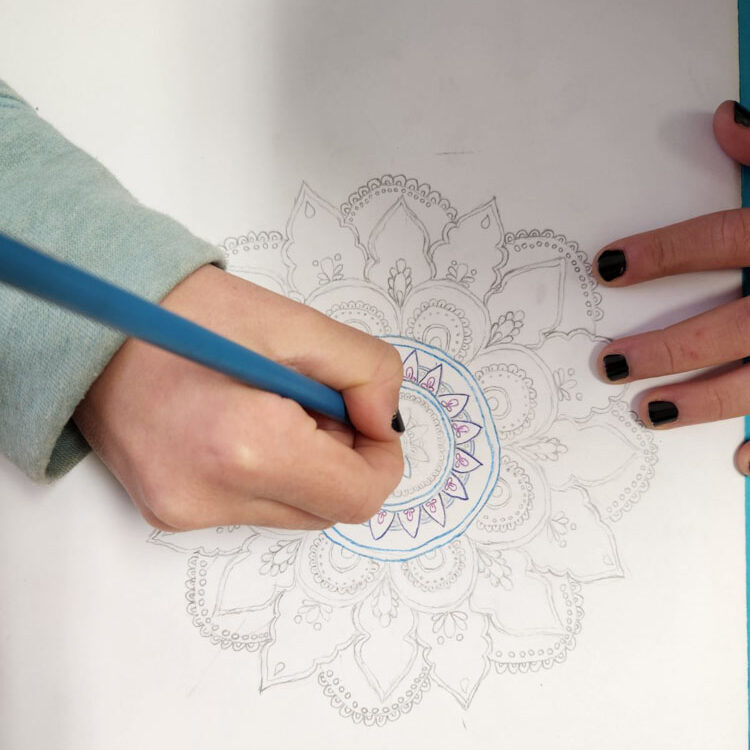
In fifth grade, Waldorf students study ancient cultures, botany, geometry, and geography, fostering a balance between intellectual growth and creative expression as they transition into more independent learning.
Language & Literature
- Dictionary skills
- Parts of speech: nouns, pronouns, adjectives, verbs, adverbs, conjunctions, and prepositions
- Verb tenses: past, present, future
- Parts of the sentence: subject and predicate
- Synonyms, antonyms, contractions, and homophones
- Composition: the sentence, the paragraph, punctuation, writing a rough and final draft
- Recitation of speech exercises and poems
- Peer editing and peer sharing of written work
- Review of different types of sentences: interrogative, exclamatory, imperative, and declarative
- Plural nouns, possessive nouns, proper nouns, pronouns, and possessive pronouns
- Comma usage
- Letter writing
- Reading selected class readers
History
- Ancient cultures: Persia, India, Babylonia, Egypt, Greece
Mathematics
- Operations and algebraic Thinking
- Number and operations in base ten
- Number and operations—fractions
- Measurement and data
- Geometry
Science
- Botany
Geography
- Geography of the United States
Specialty Subjects
- Spanish: vocabulary, using verbs, grammar, culture
- Handwork: knitting in the round on double-pointed needles
- Visual Arts: painting, guided drawing
- Music: singing, recorder, strings class (violin/viola/cello)
- Movement: games, cooperative activities, and small-sided games involving manipulative skill development and team play, introduction to formal sports (soccer, basketball, volleyball, football), Greek Pentathlon, sportsmanship, warm-up and fitness.
- Community Class: communication skills, listening, skill and abilities, families and community, cultures, feelings about differences, perspective and stereotypes, bullying and bias, being an ally
- Woodwork